
Compound Microscope
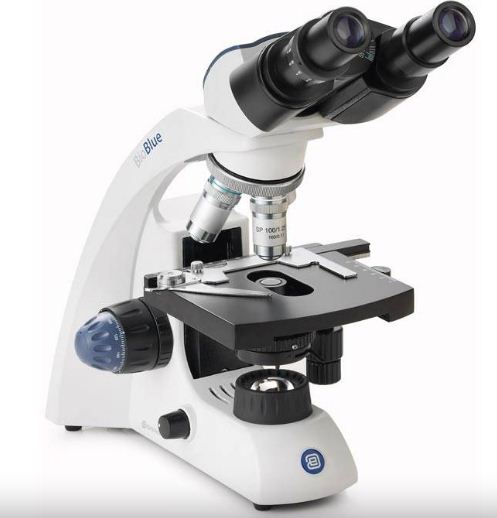
A Compound Microscope is a high-resolution optical instrument that uses at least two sets of lenses—the objective and the eyepiece—to produce a two-dimensional, magnified image of a specimen. It is primarily used to observe microscopic subjects such as cells, bacteria, and tissues, with standard magnification ranging from 40x to 1000x.
Key Features and Components :
- Optical System: Employs an objective lens (closest to the specimen) and an eyepiece (ocular lens) to “compound” the magnification.
- Magnification Range: Typically offers 40x to 1000x, though professional models can reach 2000x or 2500x.
- Focusing Mechanism: Uses coarse adjustment knobs for initial rough focusing and fine adjustment knobs for high-precision clarity at high magnifications.
- Illumination: Specimens are illuminated from below by a built-in light source (typically LED or halogen). An condenser and iris diaphragm control the focus and intensity of this light.