
Stereo Microscope
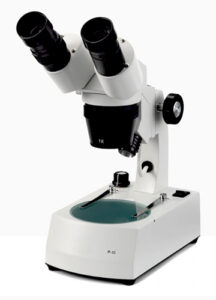
STEREO MICROSCOPE
A Stereo Microscope, also known as a dissecting microscope, is an optical instrument designed for low-magnification, three-dimensional (3D) observation of specimens. Unlike a compound microscope, it uses two separate optical paths to provide each eye with a slightly different viewing angle, creating depth perception and a spatial view of solid, opaque objects.
Key Features and Specifications
- Magnification Range: Typically lower than compound models, ranging from 10x to 80x, though advanced zoom models can reach up to 180x or more.
- Working Distance: Features a significantly larger working distance (the space between the lens and the specimen), allowing for the use of tools for dissection, soldering, or assembly.
- Illumination: Often uses reflected light (incident light) to illuminate the surface of an object, though many models also include transmitted light from below for translucent samples.
- 3D Viewing: The dual-objective design provides a true stereoscopic image, which is critical for tasks requiring hand-eye coordination.