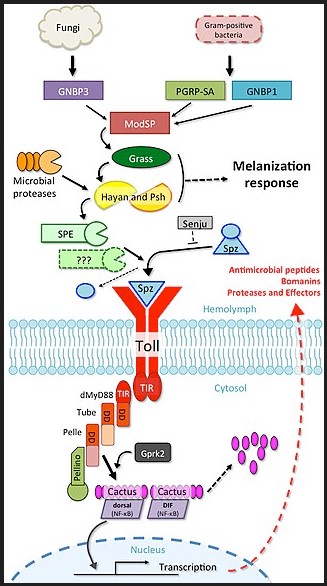
TLR Antibody
Toll-like receptors (TLRs) are a class of proteins that play a key role in the innate immune system. They are single-pass membrane-spanning receptors usually expressed on sentinel cells such as macrophages and dendritic cells, that recognize structurally conserved molecules derived from microbes. Once these microbes have breached physical barriers such as the skin or intestinal tract mucosa, they are recognized by TLRs, which activate immune cell responses.
The TLR include TLR1, TLR2, TLR3, TLR4, TLR5, TLR6, TLR7, TLR8, TLR9 , TLR10, TLR11, TLR12, and TLR13, though the last three are not found in humans. The ability of the immune system to recognize molecules that are broadly shared by pathogens is, in part, due to the presence of immune receptors called toll-like receptors (TLRs) that are expressed on the membranes of leukocytes including dendritic cells, macrophages, natural killer cells, cells of the adaptive immunity T cells, and B cells, and non immune cells (epithelial and endothelial cells, and fibroblasts).